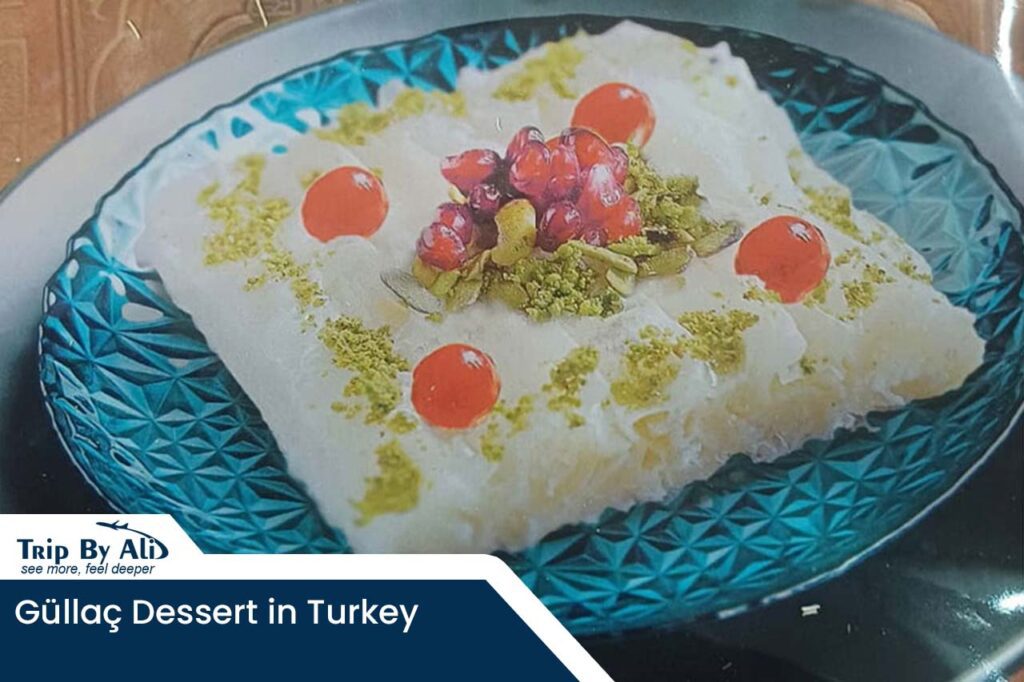
Güllaç is one of the most refined and distinctive desserts in Turkish cuisine, known for its delicate layers, milk-based texture, and subtle sweetness. Unlike syrup-heavy pastries that dominate many traditional sweet trays, Güllaç offers a lighter and more balanced flavor profile, making it a unique presence within traditional Turkish desserts and sweets. Its elegant presentation, often decorated with pistachios or pomegranate seeds, reflects a culinary tradition shaped by both Ottoman heritage and modern Turkish dining culture.
Although many people associate Güllaç with Ramadan, it is not limited to one season. The dessert holds a broader place within Turkish food culture and culinary traditions, where milk-based sweets play an important role alongside baked and syruped pastries. Understanding Güllaç means exploring its historical roots, ingredients, cultural symbolism, and seasonal popularity within the wider framework of Turkish gastronomy.
What Is Güllaç and Why Is It Unique in Turkish Cuisine?
Güllaç is one of the most distinctive milk-based desserts in Turkish cuisine, known for its delicate texture and light sweetness. Unlike syrup-heavy pastries such as baklava, Güllaç is prepared with thin starch-based sheets softened in sweetened milk, creating a soft and refreshing consistency. Its subtle flavor, often enhanced with rosewater and topped with pomegranate seeds or pistachios, makes it visually elegant and easy to enjoy after a full meal.
Within the broader landscape of traditional Turkish desserts and sweets, Güllaç stands apart because of its texture and preparation method. It represents a different branch of Turkish dessert culture, one that emphasizes balance, lightness, and refined simplicity rather than richness.
The Historical Origins of Güllaç in Ottoman Culinary Tradition
Güllaç dates back to the Ottoman Empire and is believed to have originated in palace kitchens. Historical accounts suggest that the dessert evolved from starch-based sheets originally prepared as dried food products. Palace chefs later adapted these sheets by soaking them in sweetened milk, transforming them into a refined dessert suitable for elite dining.
Over time, this palace recipe spread into urban households and pastry shops, becoming part of mainstream Turkish culinary tradition. Exploring Güllaç within the framework of Turkish food culture and culinary heritage reveals how Ottoman gastronomy continues to influence modern dessert traditions.
Ingredients and Traditional Preparation of Güllaç
Authentic Güllaç relies on a small number of carefully balanced ingredients. The thin sheets are made from starch and water, dried for storage, and later softened with warm sweetened milk. The milk often contains a mild rosewater aroma, which gives the dessert its characteristic fragrance without overpowering the flavor.
The sheets are layered carefully, allowing each layer to absorb milk evenly. The dessert is then topped with crushed pistachios, walnuts, or pomegranate seeds. Proper preparation ensures that the texture remains soft yet structured, avoiding excess moisture. Unlike baked pastries, Güllaç requires precision in soaking rather than cooking.
Varieties and Modern Interpretations
While the traditional version remains dominant, modern variations include cream-filled Güllaç, fruit-layered versions with strawberries, and reduced-sugar adaptations. Some pastry chefs experiment with presentation while preserving the original layering method.
Despite innovation, the essence of Güllaç remains unchanged. It continues to represent a refined and minimalist approach within Turkish dessert culture and culinary traditions, offering an alternative to syrup-based sweets.
Discover More Traditional Turkish Desserts
Explore regional sweets, Ottoman recipes, and seasonal favorites across Turkey
Cultural Meaning of Güllaç in Turkish Society
Güllaç reflects values of moderation, seasonality, and shared dining. Its preparation often takes place at home, where families assemble layers together before gatherings. The dessert’s lightness makes it suitable for serving guests without overwhelming them, reinforcing its role in hospitality culture.
Within the broader context of culture and society in Turkey, Güllaç demonstrates how food traditions connect generations. Its continued presence in modern households shows how culinary practices preserve cultural memory.
Güllaç During Ramadan in Turkey
Although Güllaç is not exclusively limited to Ramadan, it becomes especially popular during the holy month. Its milk-based structure makes it easier to enjoy after long fasting hours, and bakeries prominently display Güllaç sheets during this period.
On iftar tables, Güllaç often appears as a refreshing dessert option following savory dishes. Its seasonal visibility strengthens its association with Ramadan, even though it remains part of Turkish dessert tradition year-round. Travelers exploring Ramadan in Turkey travel experiences frequently encounter Güllaç as a symbolic sweet of the month.
Güllaç in Eid al-Fitr Celebrations
During Eid al-Fitr, Güllaç sometimes appears alongside richer desserts such as baklava. While baklava dominates festive trays, Güllaç offers a lighter alternative for guests who prefer a milk-based option. Its presence connects the reflective atmosphere of Ramadan with the celebratory mood of the holiday.
Understanding this transition helps travelers appreciate how dessert traditions shift between the holy month and the festive period described in Eid al-Fitr in Turkey celebrations and customs.
Why Güllaç Appeals to Culinary Travelers
For visitors interested in food culture, tasting Güllaç provides insight into seasonal culinary rhythms. Unlike desserts that remain constant throughout the year, Güllaç highlights how Turkish cuisine follows cultural and religious calendars.
Exploring Güllaç alongside traditional Turkish desserts and sweets guide allows travelers to see how milk-based and syrup-based desserts coexist within Turkish gastronomy. The experience of tasting Güllaç in Istanbul or other cities complements visits to historical neighborhoods and cultural landmarks.
Want to explore more about Istanbul? Start your journey from the Trip by Ali homepage.
FAQ
Is Güllaç only eaten during Ramadan?
No. It is available year-round in some places, but it is most popular during Ramadan.
What is Güllaç made of?
It consists of starch-based sheets layered with sweetened milk and topped with nuts or pomegranate.
Does Güllaç contain syrup like baklava?
No. It uses milk instead of sugar syrup, making it lighter.
Is Güllaç an Ottoman dessert?
Yes. It originated in Ottoman palace cuisine and later became part of mainstream Turkish food culture.
Experience Turkish Culinary Heritage
From seasonal sweets to classic desserts, discover flavors that define Turkey’s food culture
Written by Ali Rahnama — Local Eco Tour Guide and Travel Storyteller.
Explore my Google Maps contributions •
Discover more at Trip by Ali.