The pre-dawn meal, known as Suhoor, is a cornerstone of the spiritual and culinary experience during the holy month of Ramadan in Türkiye (formerly known as Turkey). Unlike the festive and social atmosphere of Iftar, Suhoor is a more intimate, quiet, and reflective time where families gather to prepare their bodies and minds for the day of fasting ahead. It is a ritual that combines tradition with the practical need for sustained energy, ensuring that every bite serves a purpose.
In the mystical hours before the first light of dawn, the streets often echo with the rhythmic beating of the Ramadan drummer (Ramazan Davulcusu), a centuries-old tradition meant to wake the faithful. This meal is not just about sustenance; it is a profound cultural practice that connects the modern Turkish household to generations of ancestors who shared the same flavors under the fading starlight.
The Traditional Suhoor Table: A Balance of Flavors
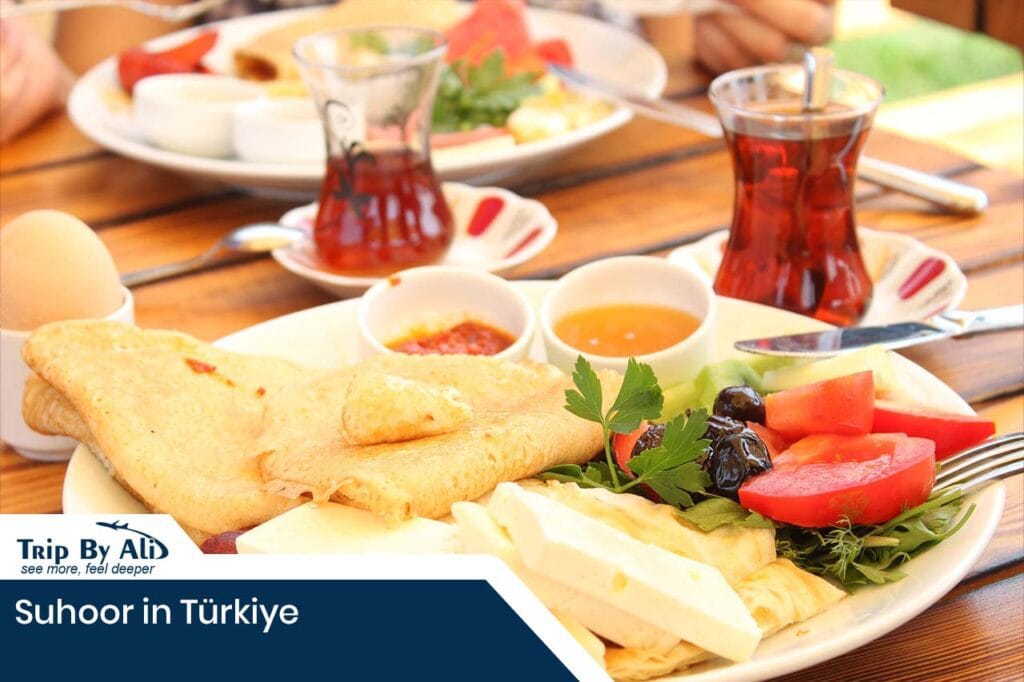
The typical Suhoor spread is often compared to a rich Turkish breakfast, but with a strategic focus on hydration and long-lasting energy. You will almost always find a variety of white cheeses, olives, and fresh tomatoes, accompanied by honey and clotted cream (kaymak) to provide a gentle energy boost. The goal is to create a meal that is satisfying enough to prevent hunger but light enough to allow for a few more hours of rest before the day truly begins.
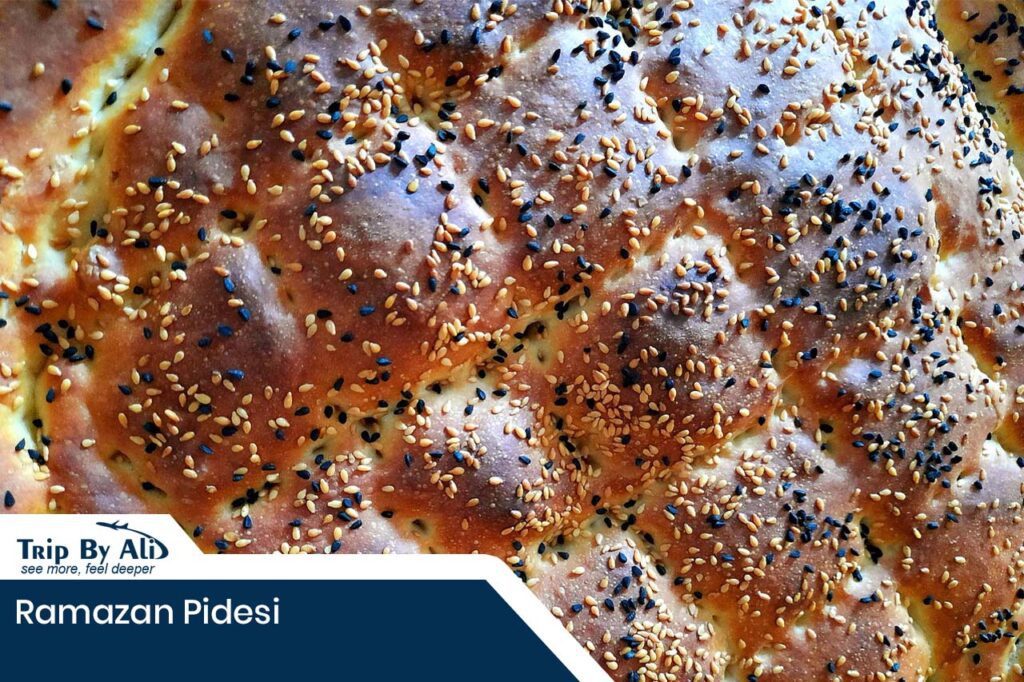
In addition to the cold spreads, many families prepare warm dishes such as Menemen (scrambled eggs with tomatoes and peppers) or simple omelets to add protein to the meal. Bread remains the essential vessel for all these flavors, often featuring the leftovers of the famous Ramazan Pidesi or toasted sourdough. Every element on the table is carefully selected to ensure a balance of salty, sweet, and savory notes that reflect the diversity of the local pantry.
Got Questions About Ramadan Traditions?
If you’re planning a visit during the holy month, I’m here to help you navigate the local customs and best spots.
Essential Foods for a Long Fasting Day
Protein and healthy fats take center stage during Suhoor to ensure that the body stays nourished throughout the long daylight hours. Eggs, prepared in various styles from boiled to fried with sucuk (spicy sausage), are the most common source of protein found in Turkish homes during this time. Additionally, walnuts, hazelnuts, and dried fruits like apricots are frequently consumed to provide a natural source of fiber and essential minerals that help maintain stamina.
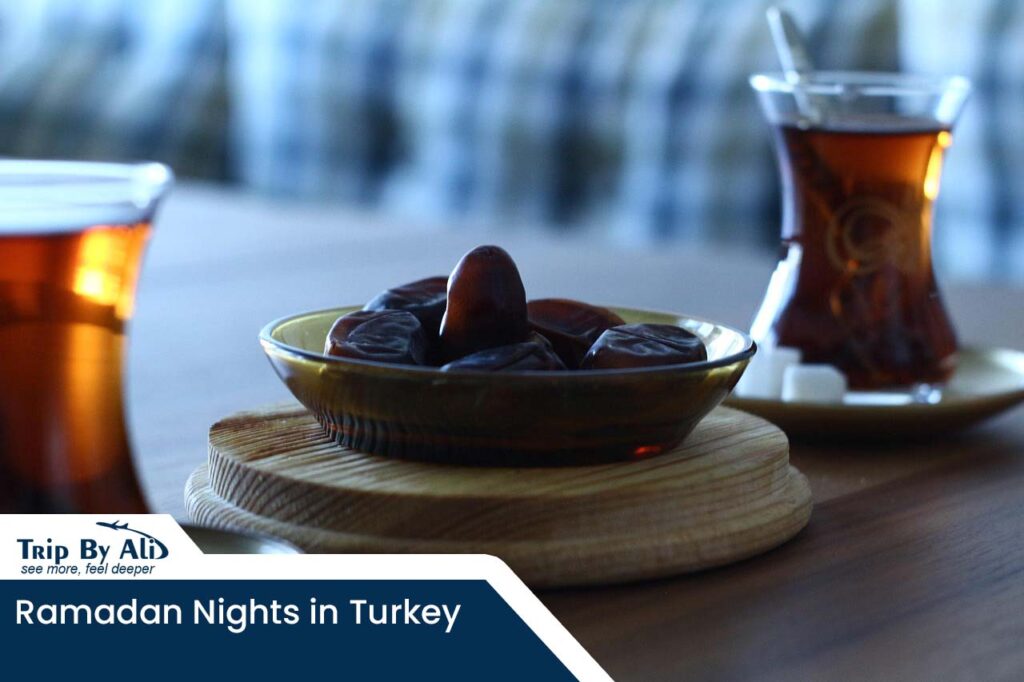
Hydration is perhaps the most critical aspect of the Suhoor meal, as it is the last opportunity to drink water before sunset. While water is the primary choice, many locals also enjoy a glass of ayran (a salted yogurt drink) or a cup of light Turkish tea to round off the meal. Compotes made from dried fruits, known as Hoşaf, are also a traditional favorite, as they provide both hydration and a gentle sugar hit that helps regulate blood sugar levels during the fast.
The Cultural Significance of the Ramadan Drummer
One of the most enchanting aspects of Suhoor in local neighborhoods is the sound of the Ramazan Davulcusu. These traditional drummers wander through the streets in the middle of the night, wearing traditional Ottoman attire and chanting poetic verses known as Mani. Their role is to ensure that no one misses their pre-dawn meal, acting as a living alarm clock that has survived the age of smartphones and digital technology.
This tradition creates a unique sense of community, as the sound of the drum signals a collective awakening across the neighborhood. It is a reminder of the historical importance of Suhoor as a shared communal event, even when celebrated behind the closed doors of private homes. Travelers who experience this for the first time often find it to be one of the most atmospheric and memorable parts of their journey through the Anatolian heartland.
The Cultural Significance of the Ramadan Drummer
Suhoor holds a profound place in the overall structure of the holy month, serving as the quiet foundation upon which the day of worship is built. Beyond the physical act of eating, this pre-dawn ritual is considered a time of blessing (bereket), where the silence of the night allows for personal reflection and a deeper spiritual connection. It is the moment that sets the tone for the entire day, transforming the act of fasting from a mere physical challenge into a mindful journey of patience and gratitude.
Understanding the role of this meal is essential to grasping the wider cultural fabric of the season. From the communal prayers in the grand mosques to the vibrant festivities that follow the sunset, every tradition is interconnected. To fully appreciate how these rituals shape the daily rhythm of life across the country, you can explore our comprehensive guide on Ramadan in Türkiye: Traditions, Atmosphere, and Travel Tips, where we dive into everything from the history of the month to modern-day celebrations.
Want to explore more about Istanbul? Start your journey from the Trip by Ali homepage.
FAQ
1. What is the best time to eat Suhoor in Türkiye?
The meal must be finished before the Imsak time, which is the start of the morning prayer (Fajr) and the official beginning of the fast. This time changes slightly every day as it is based on the lunar calendar and the position of the sun, so locals always check a “Ramazan İmsakiyesi” (Ramadan timetable).
2. Is it possible for tourists to find Suhoor in hotels?
Yes, most hotels in major cities like Istanbul or Antalya cater specifically to fasting guests by providing a dedicated Suhoor buffet or a special room service menu during the pre-dawn hours. Many local “Çorbacı” (soup houses) also remain open all night long to serve those looking for a warm meal before dawn.
3. What should I avoid eating during Suhoor?
To prevent excessive thirst during the day, it is highly recommended to avoid very salty foods, heavy spices, or deep-fried dishes. Turkish locals generally prefer “light” foods like cucumbers and watermelon (when in season) to stay as hydrated as possible throughout the fasting period.
4. Are the Ramadan drummers active in every city?
While the tradition is most prominent in historic neighborhoods and smaller towns, you can still find Ramadan drummers in many parts of the large metropolitan areas. It is a government-supported cultural heritage, and the drummers are often beloved figures in their local communities.
Experience the Magic of a Personalized Journey
Don’t just visit—live the culture. Let me design a custom travel plan that takes you deep into the heart of local traditions.
Written by Ali Rahnama — Local Eco Tour Guide and Travel Storyteller.
Explore my Google Maps contributions •
Discover more at Trip by Ali.