
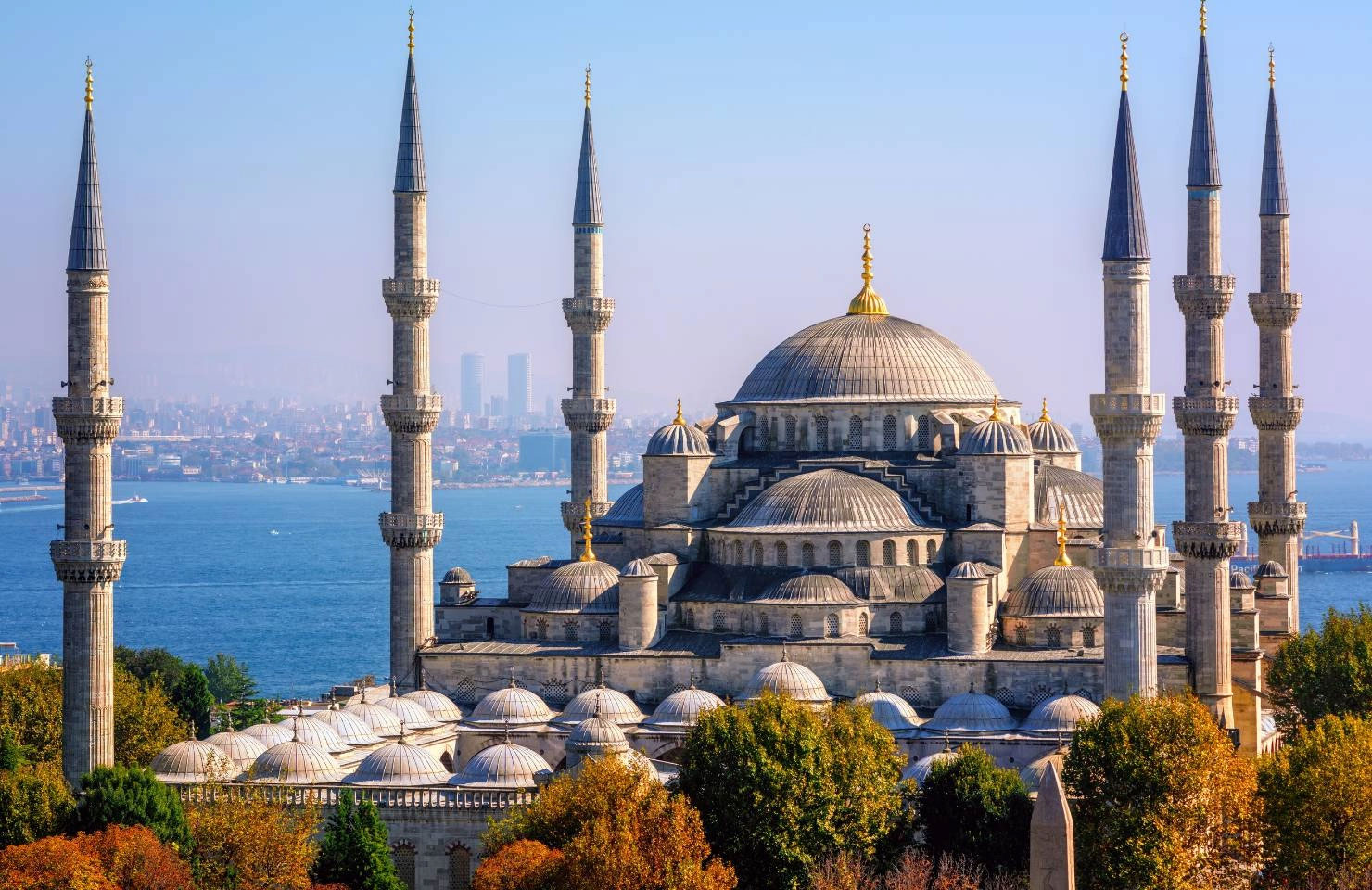
Experience the Timeless Beauty of Istanbul’s Blue Mosque
Discover the architectural elegance and spiritual significance of the Blue Mosque in Istanbul, one of Istanbul’s most iconic landmarks. A blend of imperial Ottoman glory and Islamic artistry, this majestic mosque continues to inspire awe in millions of visitors each year.
The Blue Mosque, known officially as the Sultan Ahmed Mosque, stands as one of the most iconic monuments of Istanbul. Built between 1609 and 1616 during the reign of Sultan Ahmed I, the mosque not only serves as a place of worship but also as a masterpiece of classical Ottoman architecture. Located in the historic Sultanahmet district, directly opposite the Hagia Sophia, it draws millions of visitors each year for its awe-inspiring scale, elegant domes, and vibrant blue İznik tiles
Fast Facts: Blue Masque
Built: 1609–1616 during the reign of Sultan Ahmed I
Architect: Sedefkâr Mehmed Ağa
Location: Sultanahmet Square, Istanbul
Minarets: 6
Dome Height: 43 meters
Number of Domes: 1 central dome, 8 secondary domes
Function: Active mosque and historical monument
Dress Code: Modest attire required (scarves for women)
Introduction to the Blue Mosque (Sultanahmet Camii)
The Story Behind the Name
The Blue Mosque, officially known as the Sultanahmet Mosque, owes its popular nickname to the stunning blue Iznik tiles that adorn its interior walls. These hand-crafted ceramic tiles—over 20,000 in total—feature intricate floral and geometric patterns in varying shades of blue, creating a serene and majestic ambiance under the soft natural light that enters through more than 260 windows. Although its exterior appears more grayish due to its lead-covered domes, it is the breathtaking interior that led Western visitors to call it the “Blue Mosque”—a name that has endured globally.
On the other hand, its official name is the Sultanahmet Mosque, named after Sultan Ahmed I, who commissioned its construction. “Sultanahmet” refers both to the mosque and the historic neighborhood it stands in. While locals and tourists often refer to it as the Blue Mosque because of its visual appeal, the name Sultanahmet honors the ruler’s legacy and reflects the mosque’s imperial roots.
Historical Background of Sultanahmet Mosque
The Sultanahmet Mosque, also widely known as the Blue Mosque, was commissioned by Sultan Ahmed I in the early 17th century. Construction began in 1609 and took about seven years to complete, finishing in 1616. The mosque was built to reassert Ottoman power following military defeats and to rival the grandeur of Hagia Sophia nearby. It remains one of the most iconic examples of classical Ottoman architecture, symbolizing a blend of spiritual devotion and imperial ambition.
Designed by the imperial architect Sedefkâr Mehmed Ağa, the mosque reflects the peak of classical Ottoman architecture. Its design was heavily influenced by the Hagia Sophia, visible just across Sultanahmet Square. The mosque features a massive central dome supported by four large pillars known as “elephant feet,” flanked by eight secondary domes arranged in a cascade.
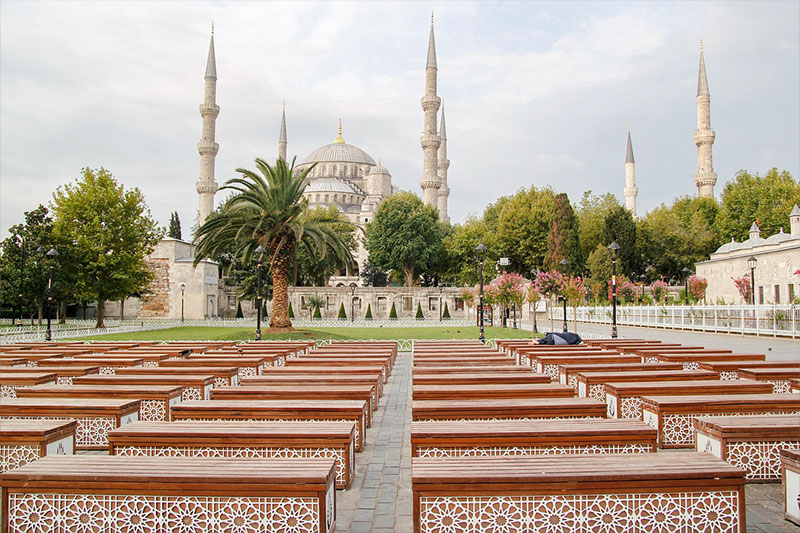
Architectural Grandeur of the Blue Mosque
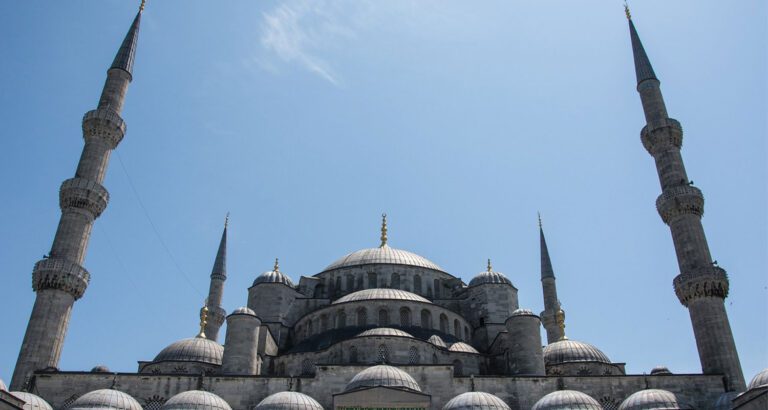
The Blue Mosque stands as a masterpiece of Ottoman design, blending traditional Islamic architecture with Byzantine elements. It features six slender minarets, a unique feature at the time of construction, which initially caused controversy due to the similarity with the mosque in Mecca. Its harmonious proportions and symmetry create a majestic presence in the Istanbul skyline.
Central Dome and Minarets
The central dome rises 43 meters high and spans 23.5 meters in diameter, supported by four massive pillars known as “elephant feet.” Surrounding the central dome are several half-domes that cascade in a pyramidal shape. The six minarets, each with a series of balconies, not only add vertical elegance but also signify the mosque’s historical prominence.
Influences from Hagia Sophia
The design of the Blue Mosque draws clear inspiration from the nearby Hagia Sophia, especially in the vast central dome and the spatial arrangement of the interior. Architect Sedefkar Mehmed Agha, a student of Mimar Sinan, sought to match the spiritual atmosphere and architectural splendor of Hagia Sophia while adding distinctive Ottoman aesthetics such as the tiled interior and cascading domes.
Interior Design and Blue İznik Tiles
The mosque’s interior is adorned with over 20,000 handmade ceramic tiles from İznik in shades of blue, green, and white. The intricate floral and geometric patterns give the mosque a serene and majestic atmosphere. The tiles reach up to the base of the main dome, complementing the painted decorations and Arabic calligraphy that embellish the structure.
Stained Glass Windows and Lighting
More than 260 stained glass windows, many of them restored, allow natural light to flood the space, enhancing the glow of the blue tiles. The floor is covered with plush red carpets, replaced regularly by donations.
Chandelier and Carpet Details
Inside the mosque, visitors are captivated by large, low-hanging chandeliers, originally illuminated with oil lamps. These lights once contained ostrich eggs to repel spiders and preserve the mosque’s pristine condition. The floor is entirely covered with custom-made carpets, regularly replaced and maintained, offering a soft and welcoming environment for prayer.
Religious and Cultural Significance
Active Mosque and Prayer Times
Although it is one of the most visited tourist attractions in Istanbul, the Blue Mosque remains an active place of worship. Five times a day, the adhan (call to prayer) echoes from its six minarets, inviting Muslims to prayer. During prayer times, tourists are not allowed inside, and visitors are expected to dress modestly—women should cover their hair, and everyone must remove their shoes before entering.
Dress Code and Etiquette
When visiting the Blue Mosque, it’s essential to respect Islamic customs, especially regarding dress code and behavior. All visitors are expected to dress modestly. For men, this means avoiding shorts above the knee and sleeveless tops. Women should wear loose-fitting clothing that covers their arms and legs, and are also required to cover their hair with a scarf. If needed, the mosque provides scarves and wraps at the entrance free of charge.
Before entering, everyone must remove their shoes. Shoe bags are typically provided so you can carry your shoes with you. Quiet and respectful behavior is expected inside the mosque. Refrain from loud conversations, turn off your phone, and avoid walking in front of people who are praying. Photography is allowed, but flash should be avoided, and it’s polite to ask before taking pictures of worshippers.
Respecting these simple guidelines ensures a peaceful and culturally aware experience for all visitors.
The Courtyard and Ablution Fountain
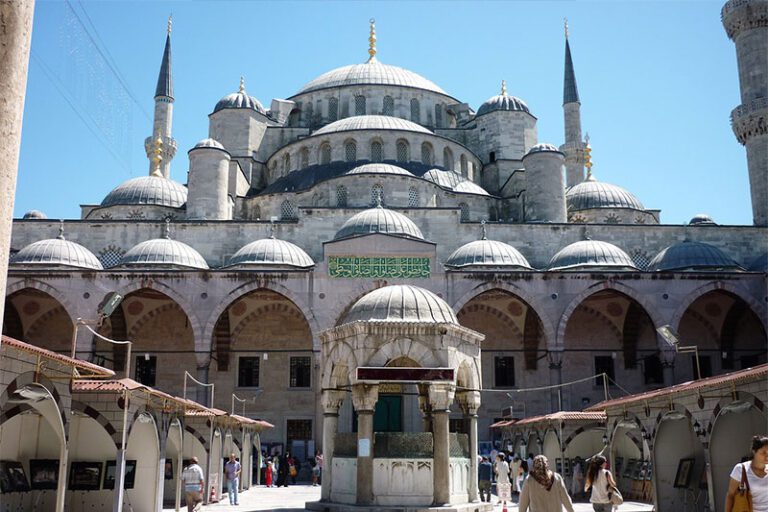
The mosque’s outer courtyard, surrounded by an arcade with 26 domed porticos, is almost as large as the mosque itself. At its center stands a hexagonal fountain used for ablution before prayer. The courtyard’s symmetry and proportion contribute to the harmonious feeling of the entire complex.
Visitors often pause here to take photographs and admire the grand façade of the mosque, especially the cascading domes and towering minarets.
Experience Istanbul's Most Revered Mosques Firsthand
Book a private or group tour of Istanbul’s historic mosques and immerse yourself in centuries of tradition.
👉 Book a Istanbul tourVisiting the Blue Mosque: Tips and Information
Admission is free for all visitors, though donations are welcomed. It’s best to visit outside of prayer times to avoid crowds and ensure entry. Early morning and late afternoon are quieter and offer ideal lighting for photography. Modesty in clothing is strictly enforced—scarves are provided at the entrance for women, and long pants or skirts are required for all.
Guided tours are available, but visitors may also explore independently. Informational panels throughout the mosque explain its history, structure, and significance.
Nearby Attractions Around the Blue Mosque
Hagia Sophia: A magnificent monument that has served as both a church and mosque; now functions as a mosque again. Its massive dome and mosaics are a marvel of Byzantine architecture.
Topkapi Palace: The opulent former residence of Ottoman sultans. Visitors can explore imperial halls, kitchens, and the holy relics of Islam.
Basilica Cistern: A vast underground reservoir supported by hundreds of Roman columns. The Medusa heads and peaceful ambiance make it a unique experience.
Hippodrome of Constantinople: Once a grand stadium for chariot races, now a historic square featuring ancient monuments like the Obelisk of Theodosius and the Serpent Column.
German Fountain: A gift from Kaiser Wilhelm II in 1900, this ornate fountain blends neo-Byzantine design with historical symbolism.
Location and Accessibility of the Blue Mosque
The Blue Mosque is located in the heart of the historic Sultanahmet district of Istanbul, directly facing the Hagia Sophia, and just a short walk from Topkapi Palace and the Basilica Cistern. Its prime location near the Sea of Marmara also offers breathtaking views and easy access from the city’s European side.
Visitors can reach the Blue Mosque easily by using the T1 Tram Line, getting off at the Sultanahmet stop, which is just a few steps from the entrance. The area is also well connected by city buses and walking paths from nearby neighborhoods such as Eminönü and Sirkeci. Whether you arrive by public transport, on foot, or as part of a guided tour, the mosque is conveniently positioned as a centerpiece of Istanbul’s Old City experience.
Navigate Your Visit to the Blue Mosque
To help you plan your visit more effectively, here’s an interactive map showing the precise location of the Blue Mosque and its proximity to nearby landmarks such as Hagia Sophia, the Hippodrome of Constantinople, Topkapi Palace, and the Grand Bazaar. Click on the map to explore walking distances, recommended routes, and public transport options for your journey.
More Mosques to Discover in Istanbul
While Blue mosque is a must-see, Istanbul is also home to other stunning mosques that showcase the city’s rich imperial heritage.
Explore more Istanbul mosque here
Want to explore more? Start your journey from the Trip by Ali homepage.
Highlights You Shouldn't Miss About Blue Mosque
In case you missed any section, here are the highlights and essential info to help you quickly navigate.
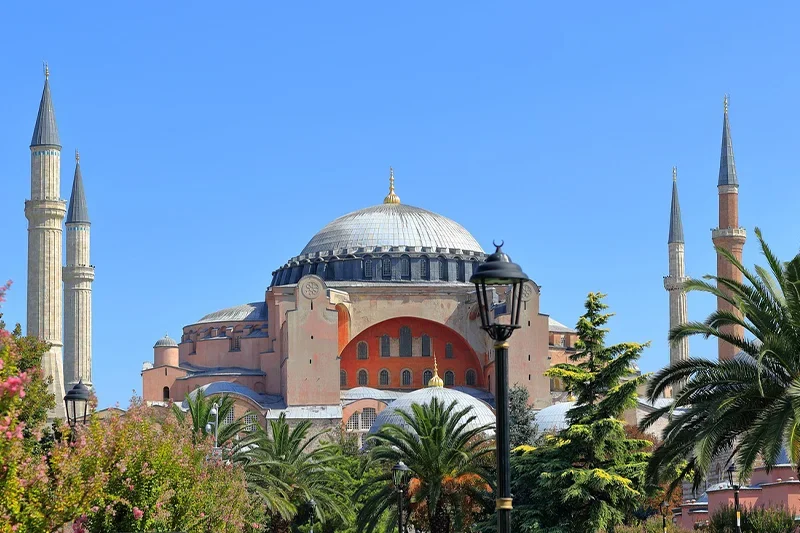
Discover the iconic structure that was once a church, then a mosque, then a museum—and is now a mosque again.
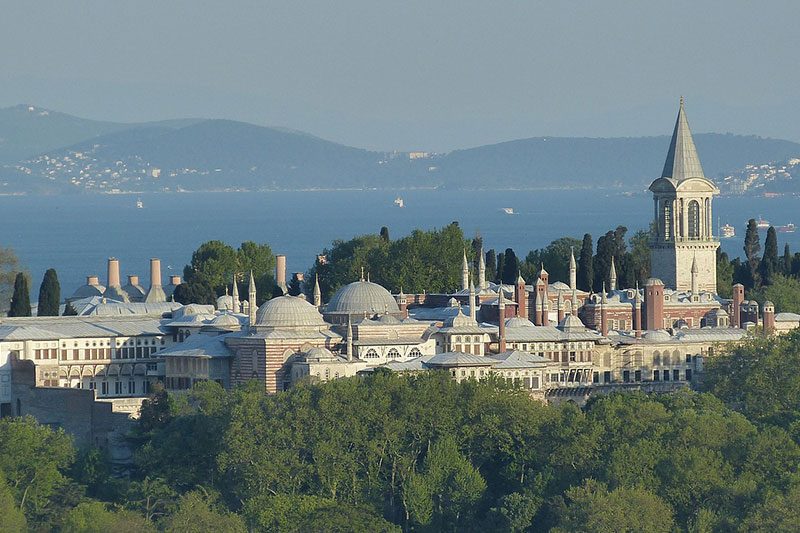
Step into the opulent world of Ottoman sultans and imperial treasures.
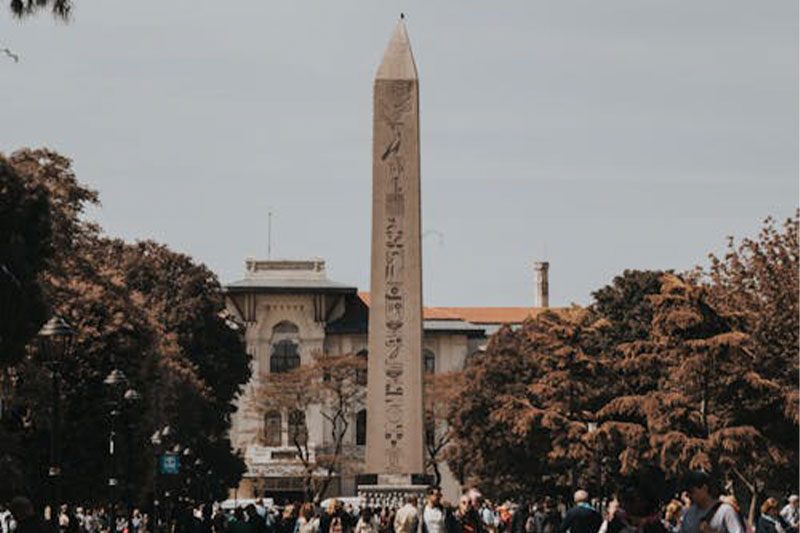
Explore the historical heart of Istanbul, where empires converged.
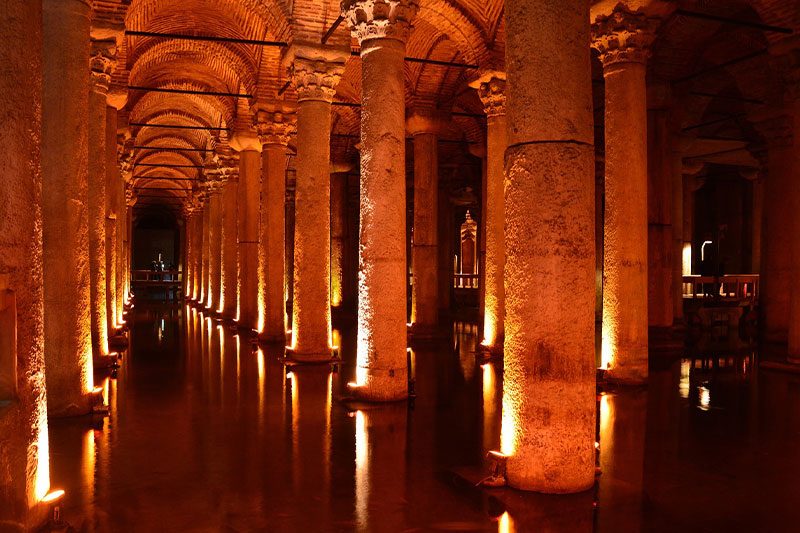
Venture underground into a Byzantine marvel of water engineering.
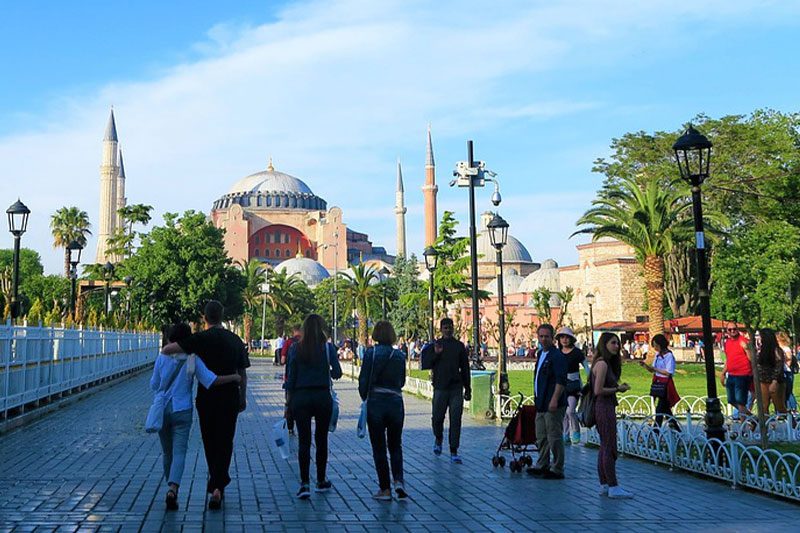
Book a professional walking tour with cultural insights and skip-the-line access.

Personalized Travel Advice
Need assistance planning your visit? Get tailored recommendations from a local expert.
Frequently Asked Questions About Blue Mosque– FAQ
Is the Blue Mosque free to enter?
Yes, entry is free. Donations are welcome.
Are non-Muslims allowed inside?
Yes, outside of prayer times, all respectful visitors are welcome.
Can I take photos inside the mosque?
Yes, but avoid using flash and do not disrupt worshippers.
What should I wear?
Modest clothing is required. Women must cover their hair.
Istanbul Is Calling!
Get your free travel consultation and customized trip plan today.
👉 Start PlanningWritten by Ali Rahnama — Local Eco Tour Guide and Travel Storyteller.
Explore my Google Maps contributions •
Discover more at Trip by Ali.